Tag: organizing
Michaels craft stores
I’m not sure how many of these there are out there but they have some great deals right now and I scored big time !!

Tips and hacks
http://www.hometipsworld.com/55-genius-tips-to-organize-your-home-in-no-time-at-all.html
Back, Forward & Back Again…
Since I started my cleaning and organizing the house journey I have had some set backs. I took a few days off to spend time with my grandkids and have simply slacked . My kitchen did get done but that was the easiest room in the house so almost doesn’t count. I have regained my determination and am back on path. I am trying to make more of a schedule to it, sort out days and projects.
2 weeks and 4 days…..
Collection or clutter?
I have lots of, collections…
Baskets, bottles, mickey mouse, little chairs and benches, plants, teapots, little watering cans and little gardening things, books, movies, birdhouses, windchimes,
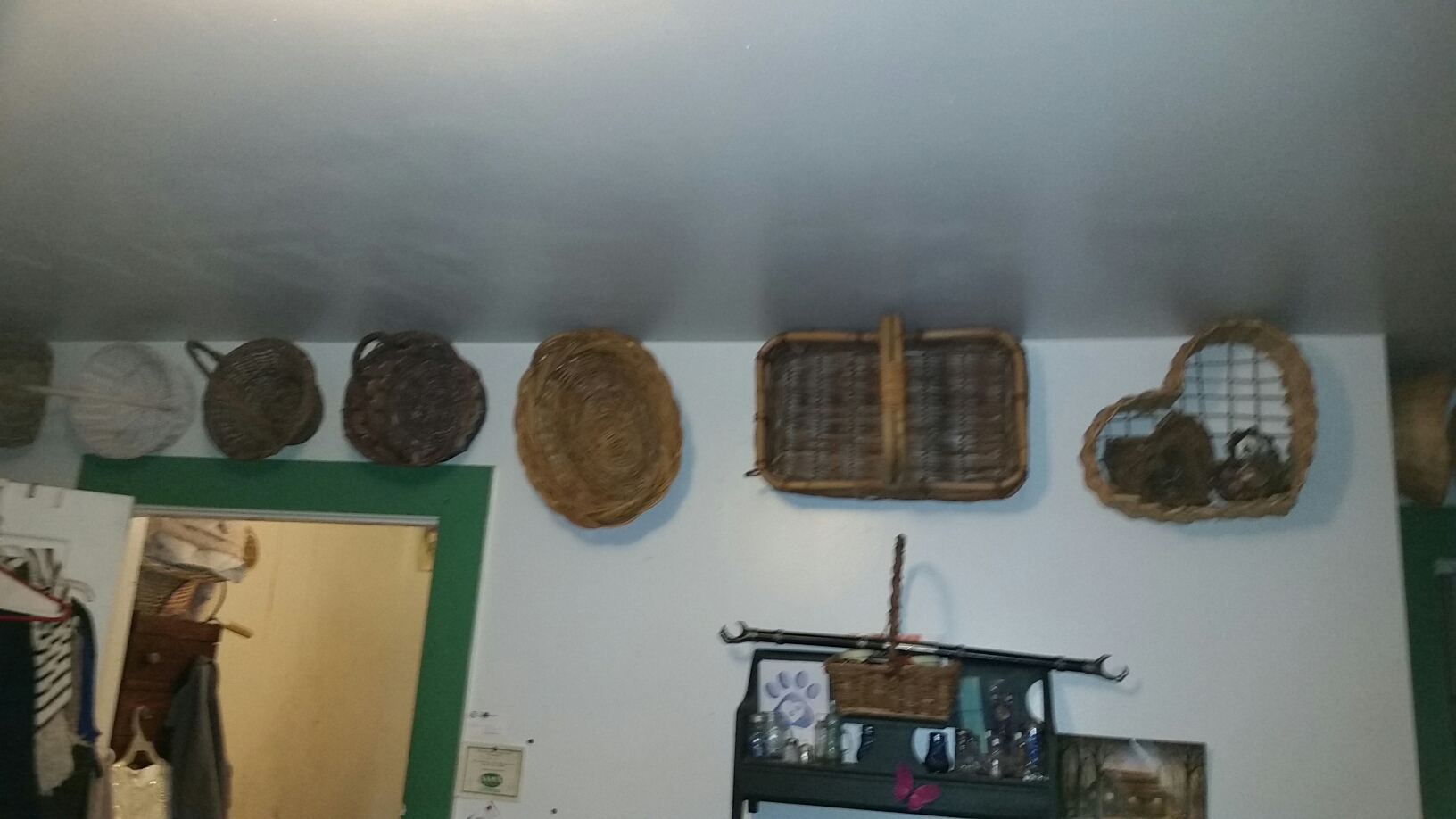
That’s just what I can think of from the top ofy head.Now when my house burned in 99 I just started collecting everything! now I’m trying to collect less.My baskets r hung up around my kitchen , the border going around the middle of the room has plants, baskets, watering cans type things in it. I have more to put up on one more wall. Then comes more decisions!!!!
This is my journey back, forward and back again. Kitchen 95%done
Day 4.

The Daily Post Prompts…..
Tiny……………….
We are just tiny specks in a much larger dust pile. Or
I have only a tiny amount of energy or insperation to clean and declutter today. I started in the kitchen, the best room already, now that I am almost done I am procrastinating on the next challenge.
I try to remember something I read once in a very old medical book about depression, it said being depressed was just being selfish. Ya, old book. It stated sitting around saying poor me is just being selfish so get up and deal with it. Not word for word but you get the point. I am hoping I will find it as I unclutter and then can be more accurate. So, I will stop rambling and get up.
Back , forward and back again
I used to be an extreme Extrovert, organized and in control. That changed in the last ten years. I was in a very unhappy emotionally and mentally abusive relationship that I just didn’t have the strength to change. I became totally opposite of my former self. In the past 2 years I have started to try to recover. I had decided when it effected my kids in an oblovious way that enough was enough.
I have gotten better at going out and doing things I need to do on my own again and my kids are doing really good, so now it’s time to start to focus on my house.
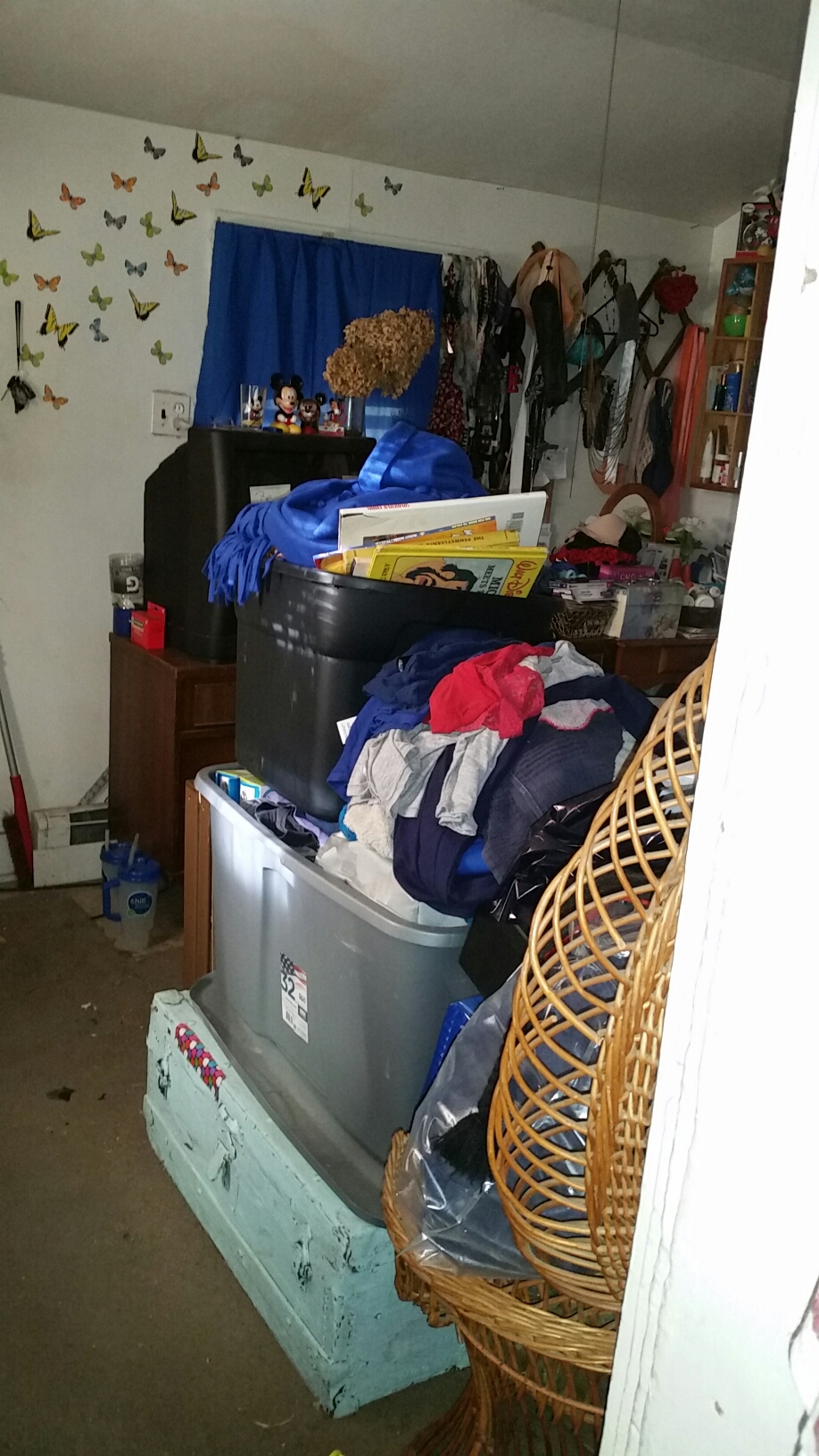
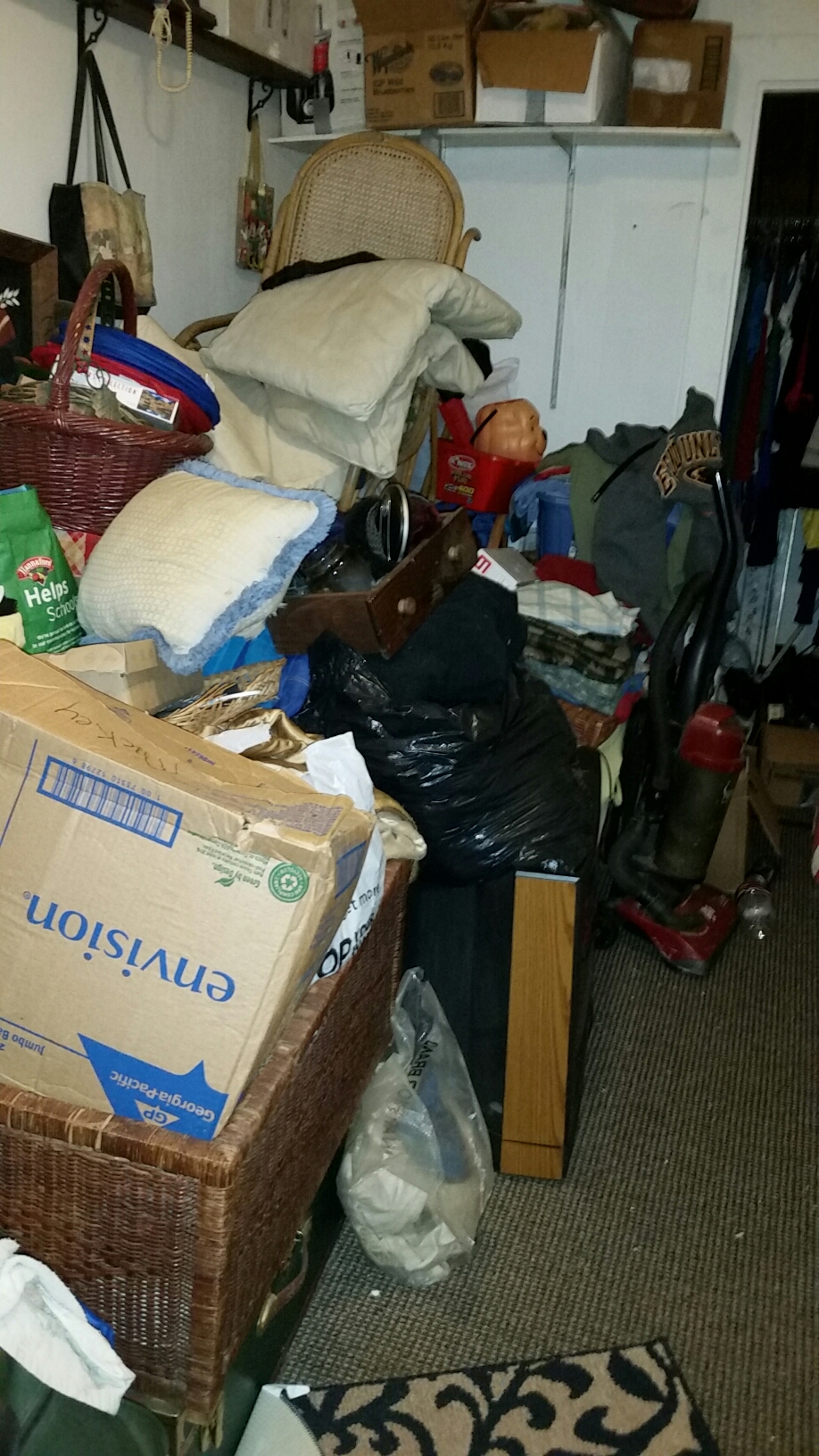
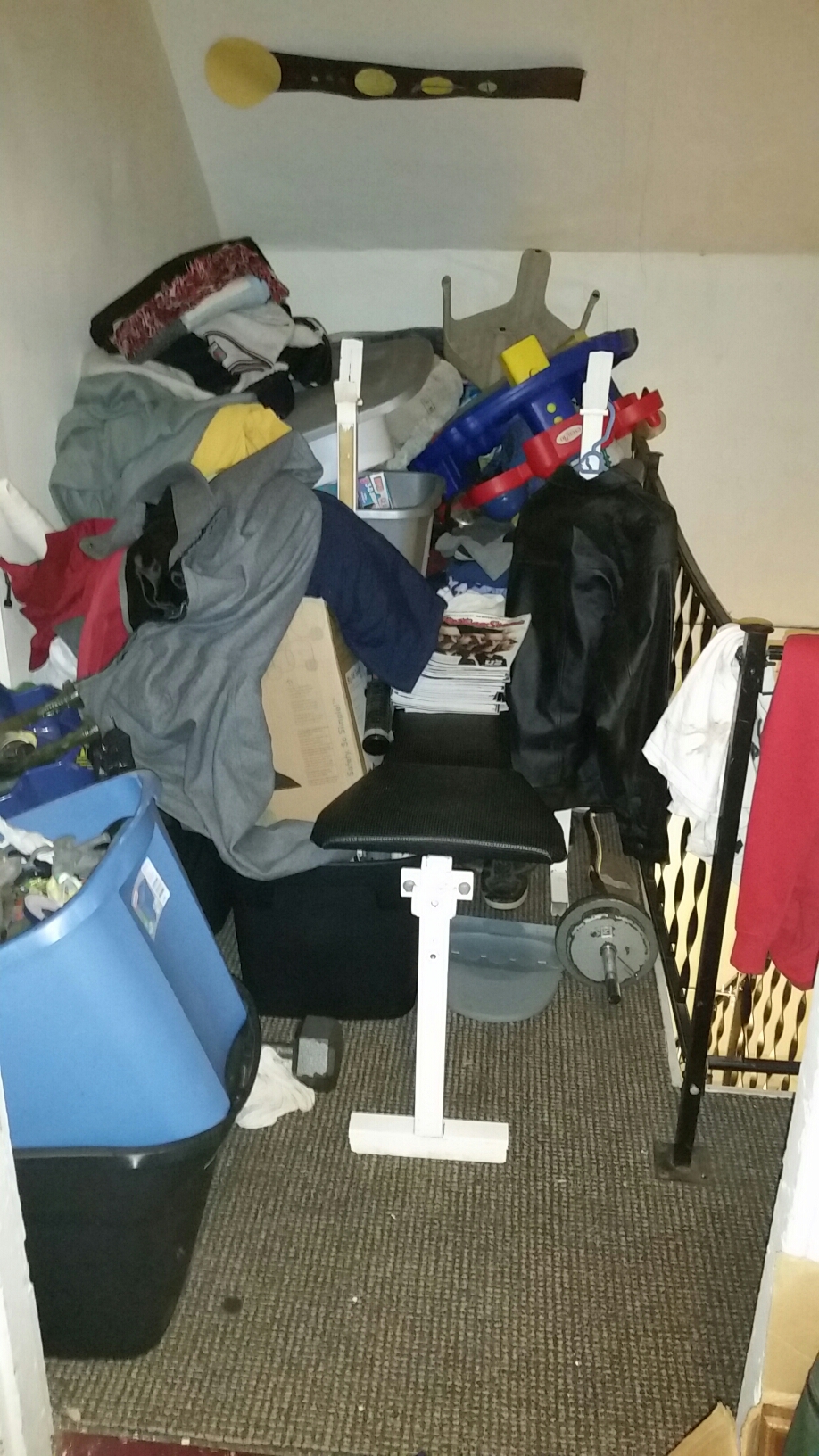
These are a couple of shots of the bad spots to give u an idea on how bad it is. I am very ashamed I let it get to this point but now it’s time to get rid of it. First comes overwhemed feeling of drowning. Stress, frustrating feeling of complete how do I do this!!!!
This is my journey from drowning in clutter and disorganization as an Introvert with times of agoraphobia to being organized, independent and hopefully able to get back to my love of art and creating things.
This is Day One.
How to Spot Psychopaths,Hiring a contractor or babysitter? Or doing some online dating? Don’t rely on your “sixth sense” to keep you safe.
We’d all like to think that we have some sort of sixth sense that will warn us when we’re truly in danger, some animal instinct that raises the hair on the backs of our necks, gives us goose bumps and sends us running in the opposite direction.
Retired FBI profiler Mary Ellen O’Toole, Ph.D., is here to tell us the truth about trusting our intuition in perilous situations. In “Dangerous Instincts: How Gut Feelings Betray Us,” she outlines how to protect yourself and your loved ones from bad people. Her tips are especially useful if you’re thinking of doing some online dating, hiring a contractor/nanny/assistant, or letting your child’s coach or another parent give him a ride home.
QUIZ: How Do You Feel About Your Relationships?
It’s perilous out there, and you could just crawl under the covers (with your entire family) and never come out. Or you can learn from O’Toole’s 28 years of experience as an FBI agent, 15 of them as a profiler with the Behavioral Analysis Unit (BAU)—the work popularized by shows like CBS’s “Criminal Minds.” O’Toole worked on such cases as the Green River Killer, the Elizabeth Smart kidnapping and the hunt for the Unabomber. This and other experience interrogating wrongdoers taught her how to read people.
It also taught her that she can’t eyeball a serial killer or a rapist or a psychopath—no one can. Even if you pride yourself on being a good judge of character, crime stats show that the majority of people are wrong…and often.
In the 1997 bestseller “The Gift of Fear: And Other Survival Signals That Protect Us From Violence,” security consultant Gavin de Becker had some compelling anecdotes about women who smelled danger, owned their fear, and walked away with their lives. Oprah dedicated an entire show in 2008 to celebrating the 10th anniversary of de Becker’s popular book on how fear can save your life.
As empowering as it would be to have that survival sixth sense, O’Toole makes the case for being prepared rather than jeopordizing your safety by trying to “wing it.” O’Toole is not one to go with her gut. “People are adamant about holding on to the idea that they have exquisite instincts,” she says. “But how many times do you really think ‘I better listen to my stomach and do what my stomach says’? Have you really had success with doing that?”
Your judgment can be thrown off by factors like fear, stress, fatigue, alcohol or drugs, she says. “What if your inner radar was off that day?” O’Toole cites many hair-raising cases she’s familiar with from her time at the FBI. Rather than relying on your fear, what she calls her SMART system (a sound method of assessing and recognizing trouble) is a series of interviewing techniques meant to be empowering. Using the type of questioning she teaches to law enforcement officials, you can learn to evaluate contractors, boyfriends, nannies and the like. “This gives people the ability to be their own profiler, in everyday life,” O’Toole says.
MORE: Are You Dating a Plate Spinner?
Scenario 1: You’re hiring a contractor to work on your house. He’ll be there with you and your family, and sometimes when you’re not home.
“Having someone come into your home with access to you (especially if you live alone) and your things is often such a casual decision,” O’Toole says. Instead, treat your first meeting like an interview. “Extracting info and reading people is a process,” says O’Toole. “You want to know if their response to criticism is going to be disproportionate. Is this the kind of person that’s just going to go ballistic?”
Among her interviewing tips: Plan the interview, be calm, and set some goals for it. You want to build a rapport and not babble on, hijacking the interview. Take it slow and “listen between the lines,” says O’Toole. Phrase questions in an open-ended, non-judgmental way: “When you’ve worked with someone and there was a problem, how did you deal with it?” Or “If someone wasn’t happy with your work, how did you deal with that?” If he avoids answers, gets defensive (“Why would you ask me such a thing?”), or changes the subject, take note.
O’Toole suggests writing down your evaluation of a person, and looking for clusters of these troubling behaviors, not just a single incident, and trying to put them in context before you make a decision.
Scenario 2: You’ve recovered from a bad breakup and are ready to date—online.
MORE: What Your Online Image Says About You
Brad’s profile catches your eye right off. He describes himself as “fit and good-looking,” and says, “I’m looking for the perfect soulmate I can love forever, someone who will love and take care of me.” O’Toole writes about the case of William Michael Barber (the “Don Juan of con”) who romanced victims via dating sites, married them, cleaned out their bank accounts, and then disappeared.
However, for would-be daters afraid that every Mr. Right is Mr. Scarypants, experts estimate psychopaths as comprising about 1 percent of the general population. Psychopathy is a personality disorder characterized by a lack of empathy or remorse, and by shallow emotions, among other things. However, they can be extremely charming and manipulative, and have learned to mime feelings in what O’Toole calls “impression management.” They are also, she says, masters at spotting your vulnerabilities.
Back to Brad’s profile. Although it’s unlikely he is a true psychopath, there are other negative behaviors to watch out for. “If you’re going to be online dating, look at the words in profiles,” she says. Look for lots of I/me statements that could indicate narcissism. And, from the above profile, the guy describing himself as good-looking could be a narcissist, she says. (She also points out that his adoring niece might have written his profile.) Plus, your own vulnerabilities can color your perception of him. If you ignore his initial neediness because you love that he’s always calling and texting to tell you how beautiful you are, you might wake up five years later with a possessive, jealous husband and think it’s a sudden change, O’Toole says. Watch for patterns of behavior or hints about how he acted in past relationships. A line like “I’m not a game-player,” is a red flag. Perhaps, she says, someone else has accused him of that.
Questions she suggests asking include: “What are your biggest concerns about meeting people online?” “When you’ve had good dating experiences, how did they go?” “When you’ve had bad dating experiences, how did those go?” She points out that if he blames all bad dates on the women involved, that’s a red flag.
MORE: First Impressions on Dates
Scenario 3: Your son Max has made a new friend, Steve, and wants to spend the night. You don’t know Steve’s family.
After buying some time, you need to meet the friend’s parents, O’Toole suggests. Even then, if they “seem nice” and have a well-mowed lawn, that doesn’t mean they don’t have unlocked guns lying around, own a pet cobra, text madly while driving, or have creepy Uncle Biff living in the basement. Get to know the parents. Check local registered sex offender lists and dangerous dog registries (the book has a chapter on such resources). Check out family members’ MySpace or Facebook pages. Visit the house; if you see mounted deer heads, that opens the door to ask about hunting and guns.
Scenario 4: A uniformed telephone repairman is at your front door, but you don’t have an appointment. The last time you let in a repairman, everything went fine—and you don’t want to seem rude.
O’Toole brings up the case of Joe LaRette, who posed as a telephone repairman to get into women’s homes, whereupon he sexually assaulted and/or murdered them. Among the questions O’Toole suggests asking yourself are: Are you expecting someone? How easy would it be for him to push his way in? Are you alone? If not, is there someone there (like a child), you’d want to protect (making you more vulnerable)? Is there a way to verify the person’s identity without opening the door—for example, by calling the company? Does he have anything in his hands that could be used as a weapon?
She says that we tend to think that other people are like us, not looking to hurt others. That’s not, alas, true. Her bottom line advice: “I would recommend not opening the door at all. Anyone with a legitimate reason to be there will leave a note or follow up with a phone call. Although this might seem rude, consider that your safety is more important than whether the company gets the job done that day.”
WHAT MAKES PEOPLE DANGEROUS
O’Toole has come up with a list of what she calls CTD behaviors (concerning, threatening or dangerous) that should give you pause, whether it’s your plumber, your daughter’s boyfriend or a new co-worker.
These are the top five:
- impulsivity
- inappropriate anger
- narcissism
- lack of empathy
- injustice collecting (someone who holds onto past slights or wrongdoings)
Know how your mind works! Profiler Mary Ellen O’Toole lists five common ways you undermine your perception of people:
NORMALIZING: finding an explanation for risky behaviors. Example: Your daughter’s boyfriend complains angrily about his job and has been practicing at a shooting range. You tell yourself he’s just letting off steam.
RATIONALIZING: A strange car is parked in front of your house for hours with a man sitting in it. You decide not to call the police because you don’t want them to think you’re overreacting.
EXPLAINING IT AWAY: The parents of a missing child turned that child’s bedroom into an office shortly after the disappearance, O’Toole says. The police had decided they weren’t suspects and explained it by saying that the house was small, and they needed a “nerve center” to manage the search efforts. (The child, says O’Toole, was never found.)
IGNORING: Denial or willful blindness on the part of parents, for example, whose school-age child is alienated and looking up bomb-making online.
ICON INTIMIDATION: Bernie Madoff looked prosperous and had rich and famous clients who swore by him. A nice suit, good grooming, and a smile, not to mention family connections or a good job, can go a long way toward fooling you.
Save Money on Cleaning Products with WHITE VINEGAR
White vinegar is often regarded as a magic cleaning solution because removes dirt, germs, and soap scum, disinfects and deodorizes, refreshes and rejuvenates fabrics, and even removes stains from virtually any surface. Many people assume that they have to spend money on multiple different cleaning products at the store, but the fact is that using basic white vinegar can save you cash on your monthly cleaning expenses.
Kitchen Uses
The cleaning aisle of your local grocery store is chock-full of various kitchen cleaning solutions – from disinfecting wipes to silver polish, and oven cleaner to floor scrubs. The fact is that you don’t need any of them because white vinegar can do it all. To remove tough stains and grease, gently rub white vinegar over the surface, let soak a bit and wipe away. If you want to just clean shelves and counter tops, mix equal parts vinegar and water, spray and wipe. This kind of vinegar solution can also be used to remove mineral deposits and to clean your garbage disposal. Running a cup of vinegar through a dish washer can clean and deodorize.
Bathroom Cleaning
Conventional bathroom cleaning products often consist of heavy-duty bleach and other toxic chemicals. White vinegar is just as effective in fighting mildew, soap scum and mold. The trick is to allow yourself time and let the vinegar sit in the affected areas before scrubbing. If you have tough stains in between tiles, simply add a little baking soda to the mix. Disinfect and clean your toilet by letting several cups of vinegar sit in the bowl for about a half hour, rinse and flush.
Furniture and Blinds
Instead of turning to expensive furniture cleaners, consider using white vinegar for spills and stains. Vinegar is even safe on leather and suede furniture—just blot the surfaces dry after removing any stains. For spot treatments on other furniture and carpet, dilute white vinegar with five parts water in a spray bottle.
Blinds can be difficult to clean, and many people waste money on purchasing fancy dusters and cleaners. Instead, grab a cotton glove and a solution of equal parts water and vinegar. While wearing the glove, dip your finger in the solution and gently wipe across each blind. After they have dried, repeat on the other side.
The Bottom Line
Cleaning with vinegar is an effective way to save money. It is far less expensive to purchase a large bottle of vinegar than it is to buy multiple various cleaning solutions. At the same time, your family will not be exposed to the toxins that are associated with other kinds of cleaners.
If you plan on using white vinegar for multiple cleaning jobs, you should purchase larger bottles. This will save you money overtime because you will end up paying less per volume. Having a wholesale club membership helps because you can easily buy the vinegar in bulk and save even more.
 Tracey in Maine